
Loading images 1%
Hmm... looks like it's taking longer than normal


2023 · Product Design · Web & Mobile

Toddle lacked a dedicated eAssessment system - an essential need for IB MYP schools preparing students for digital exams. This gap led to friction in adoption and lost opportunities.
We designed the Worksheet module to fill this gap, enabling teachers to assess student understanding in flexible, curriculum-aligned ways. Prior tools focused on content sharing, not structured evaluation.
I led the product from discovery to launch - driving research, defining the strategy, scoping the MVP, designing the experience and delivering it with engineering.
👤 1 designer (me) acting as product owner, 👨💻 9 engineers, and 🕒 8 months
Here’s a short walkthrough of how the worksheet experience works for educators and students - covering creation, evaluation, and feedback flows.


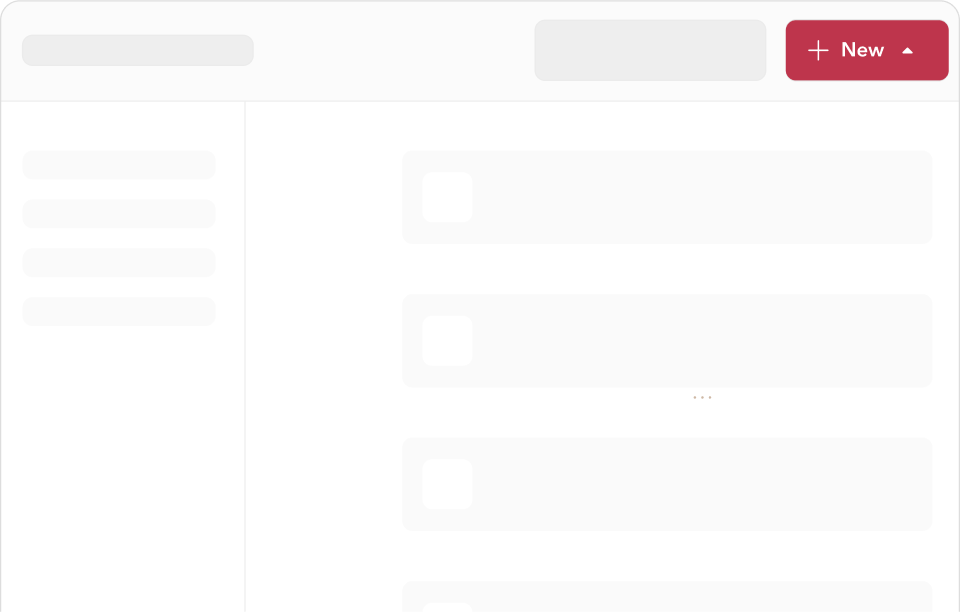
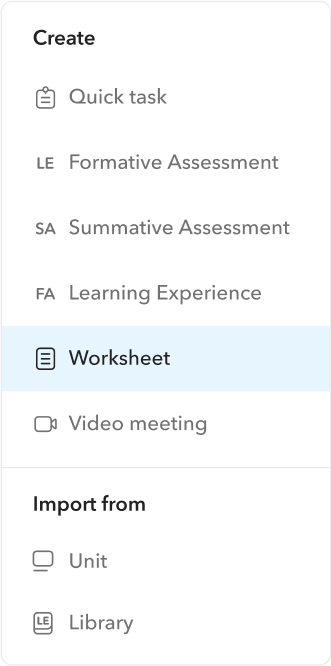
We embedded worksheet creation into the existing dropdown - making it intuitive to discover and use without adding new learning overhead.
Heuristics: Recognition over recall · Jakob's law

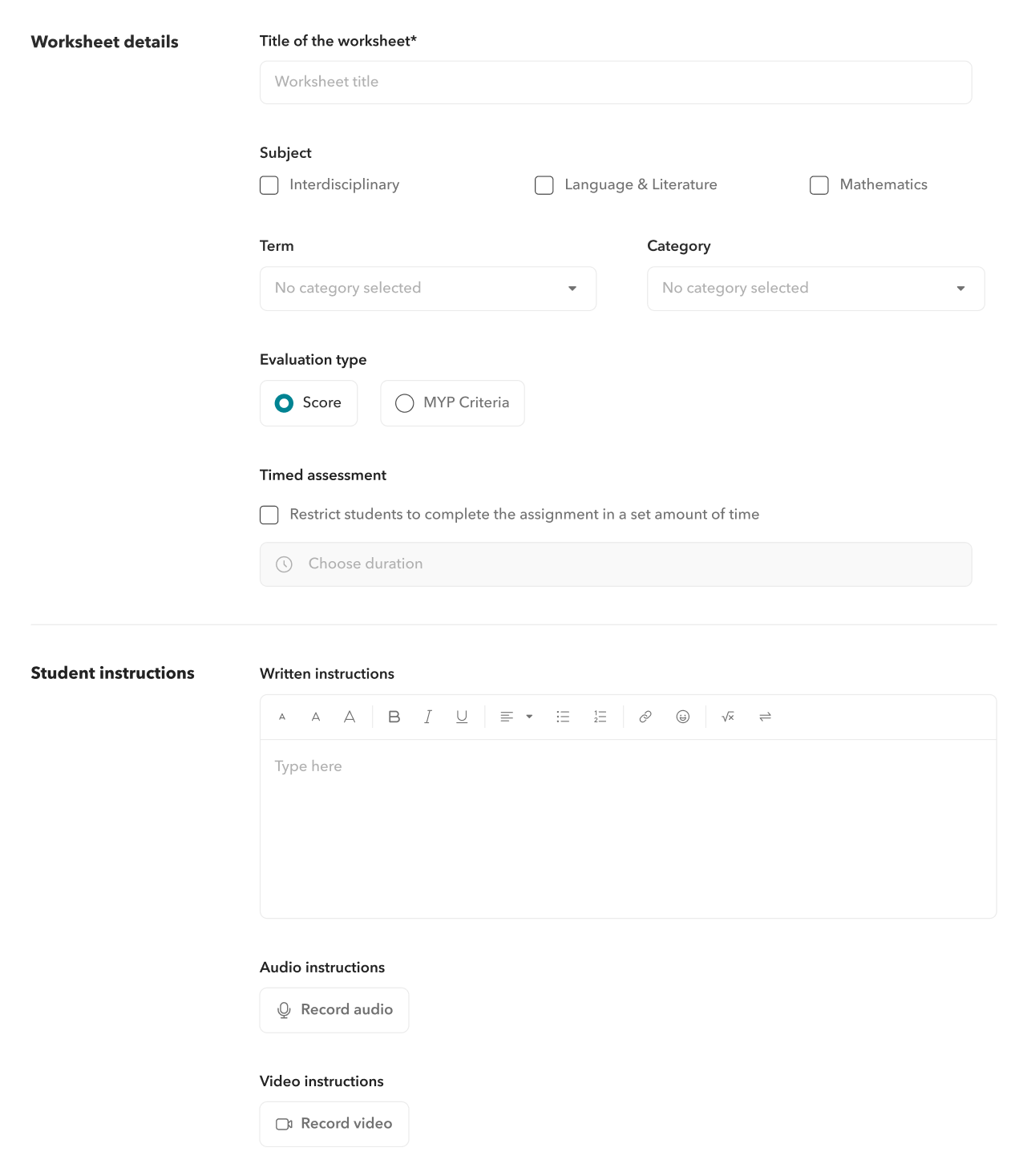



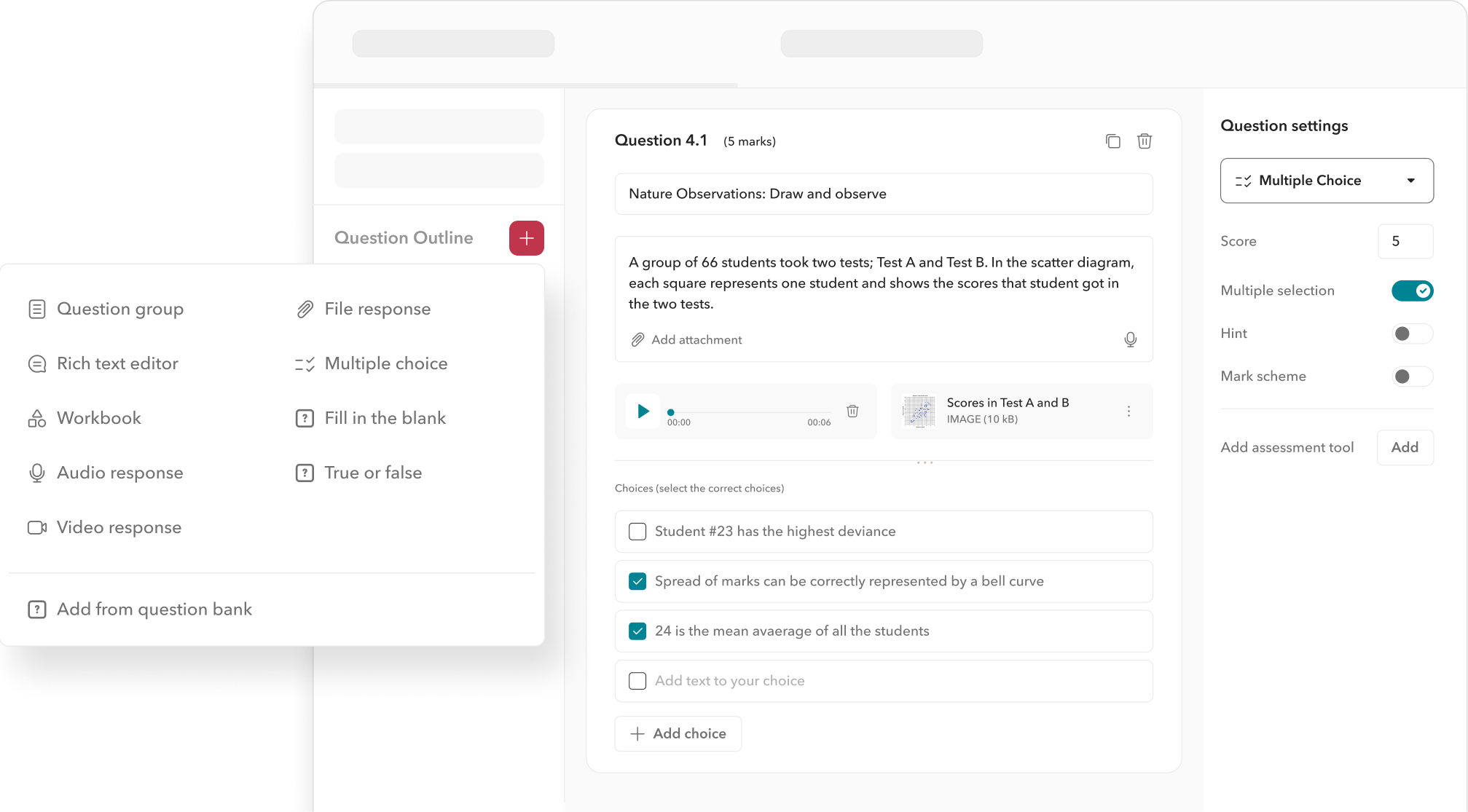
We gave teachers creative freedom to tailor worksheets to their teaching style and student needs.
Heuristics: Flexibility of use · User control and freedom





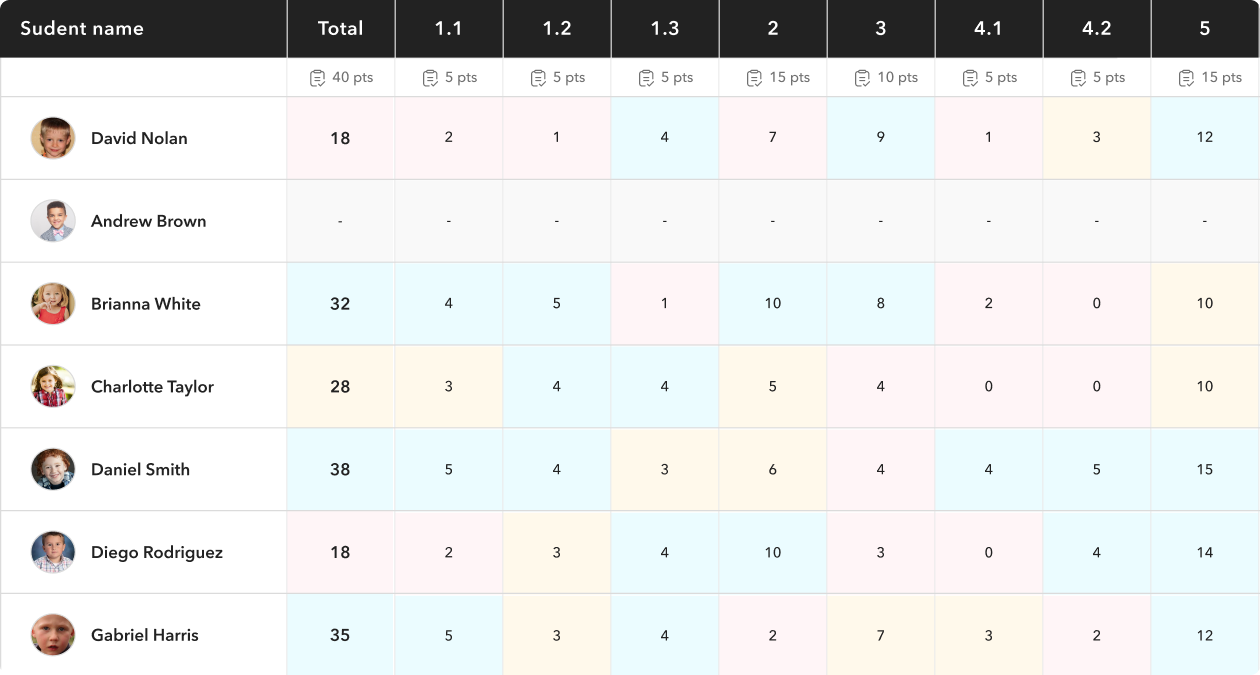
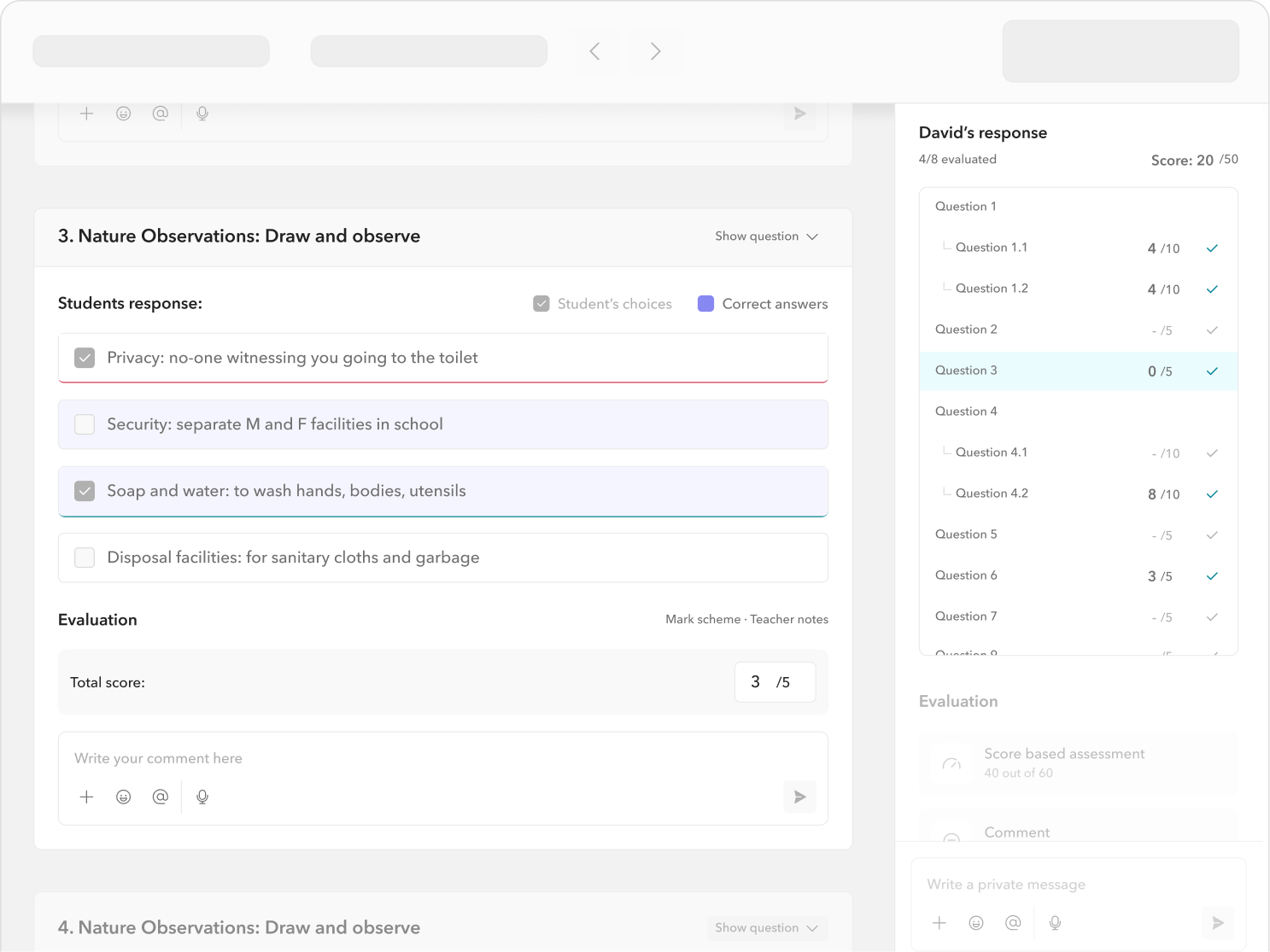
We streamlined the evaluation process to help educators deliver faster, more personalized feedback without sacrificing control.
Heuristics: Visibility of system status · Flexibility of use · User control

We made targeted improvements to the student interface, ensuring worksheets were easy to access, complete, and review on both web and mobile.
Heuristics: Match between system and real world · Visibility of system status · Consistency across platforms

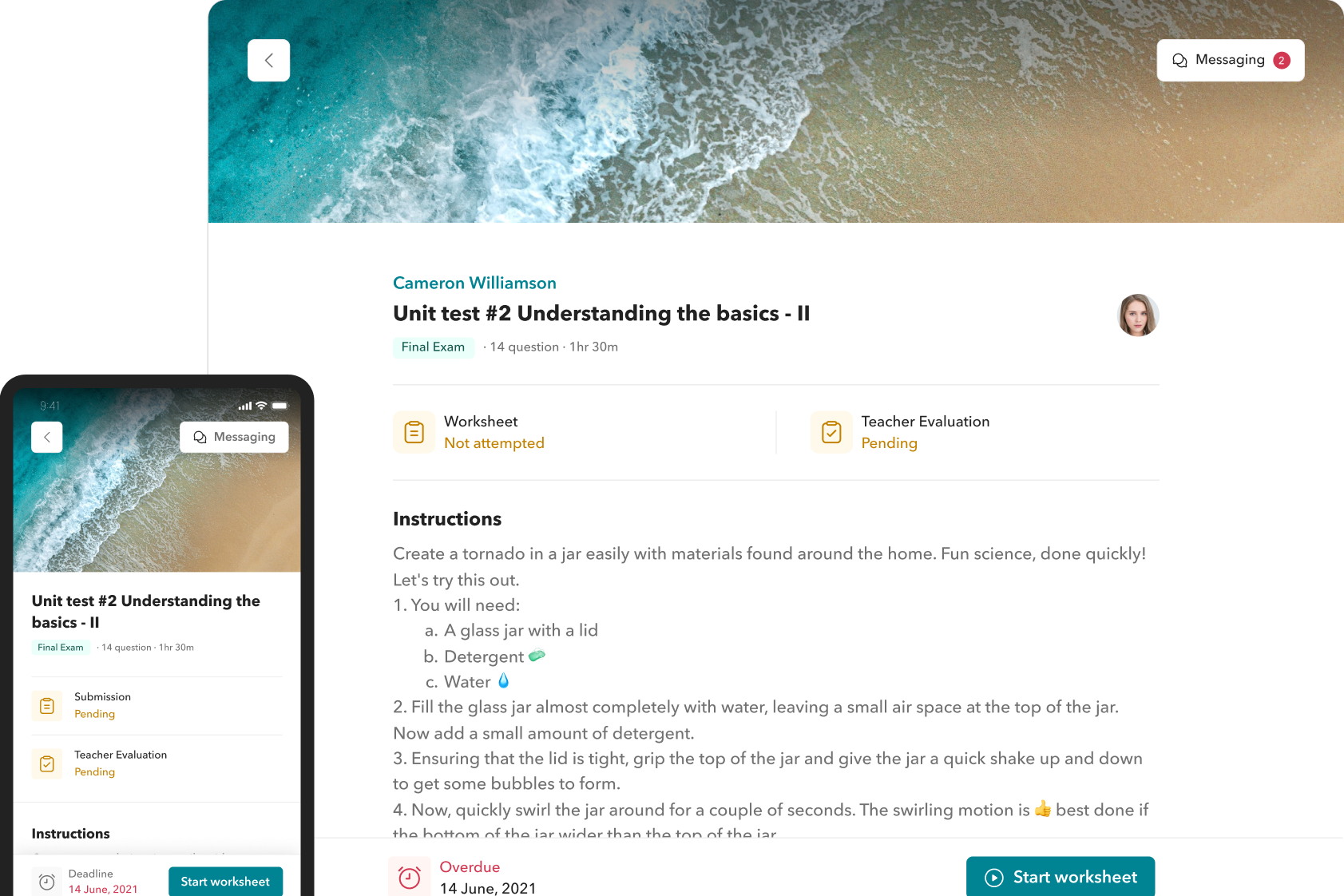
To support time-sensitive student tasks, we introduced lightweight, in-context guidance that made it easy to get started without disrupting familiar workflows.
Heuristics: Recognition over recall · Help users recognize, diagnose, and recover · Aesthetic and minimalist design
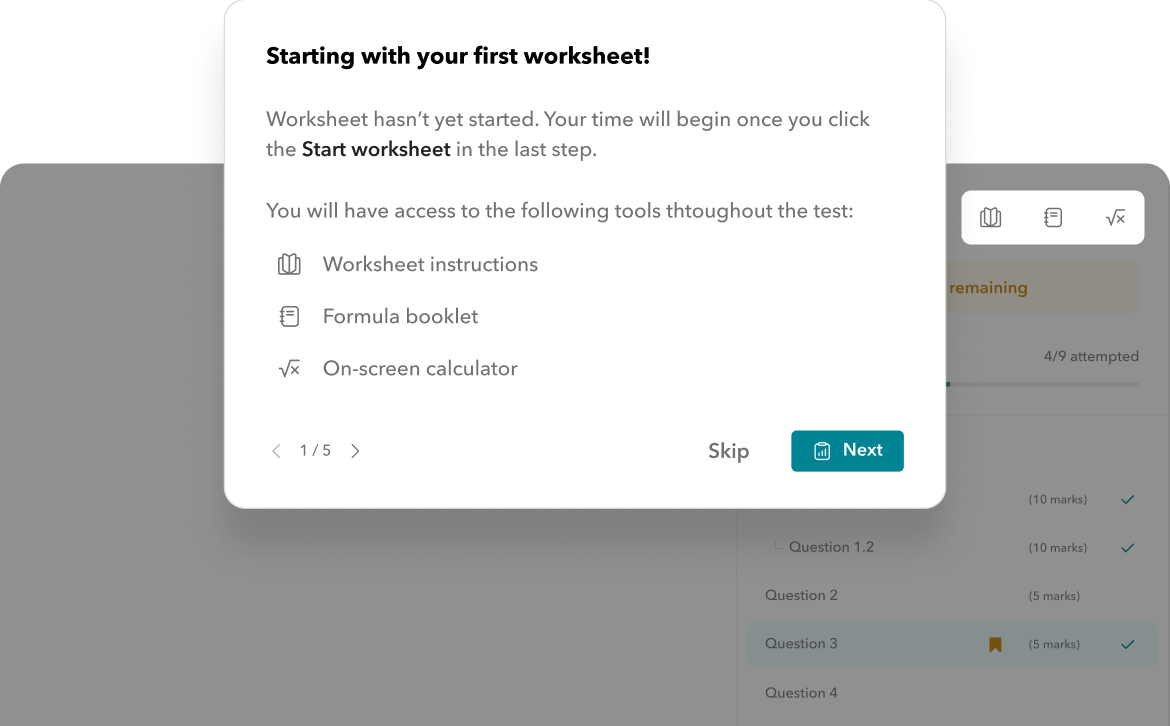
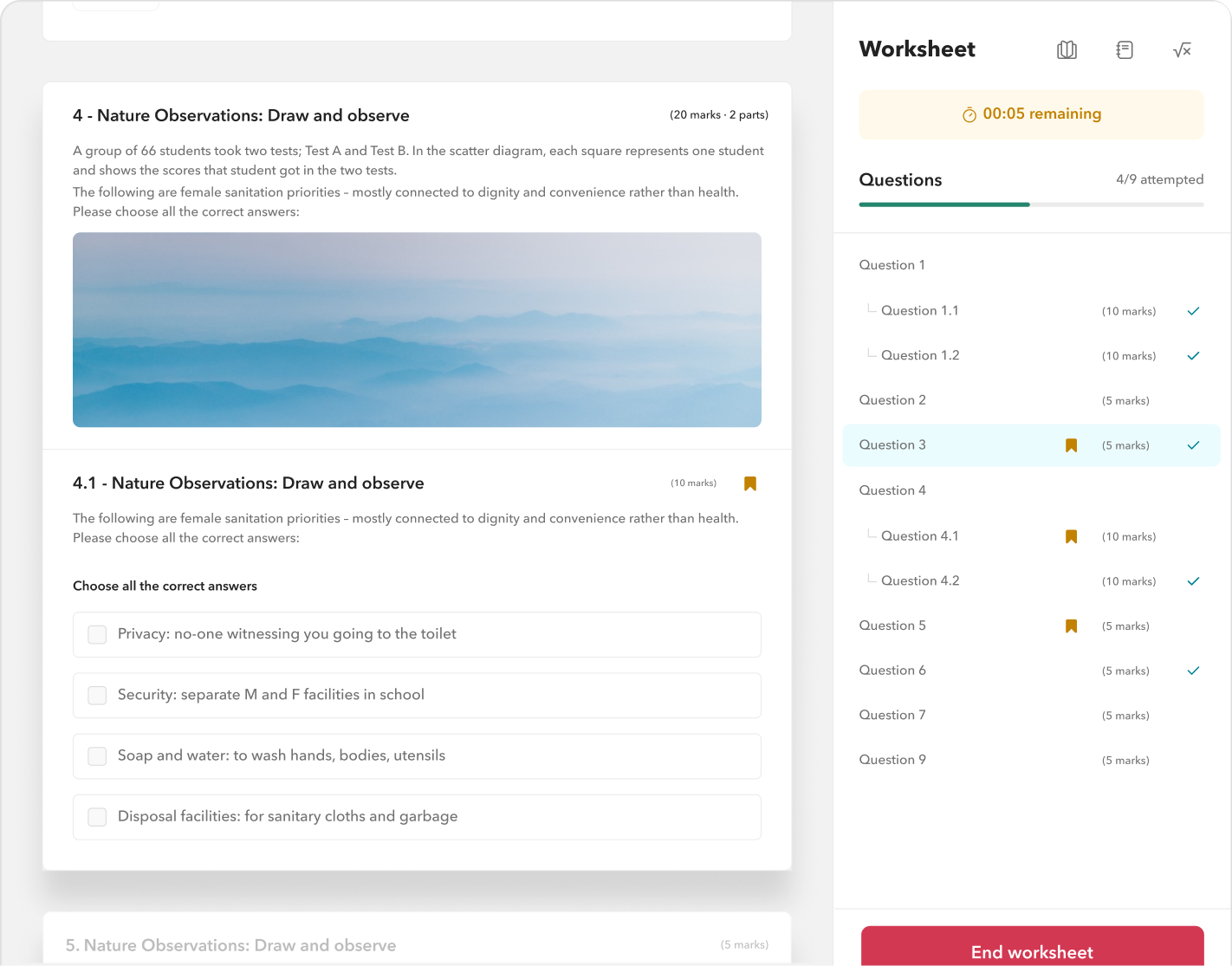
eAssessments are modern, digital alternatives to traditional exams - built to match how students learn today.
For IB schools, they’re not just a convenience - they're a core part of the MYP (Middle Years Programme) evaluation framework. At Toddle, launching worksheet-based eAssessments was essential for enabling teachers to guide students through meaningful, skill-based learning journeys and prepare them for these critical exams.
The International Baccalaureate conducts two major eAssessment sessions annually—each with a unifying “global context” that anchors interdisciplinary thinking. Every on-screen exam includes three tasks: two subject-specific, and one tied to that global theme. These tasks are designed to assess both conceptual understanding and applied skills.
We used these structures to inform how worksheets should be built—balancing flexibility for educators with alignment to MYP standards.
See this Figjam for a breakdown of assessment structures and workflows:


View MYP eAssessment in detail
Adding worksheet-based eAssessments wasn’t just a feature request - it was a growing necessity for Toddle to stay relevant and win IB schools.
The global eAssessment market crossed $2.9B by 2019 and surged further post-pandemic. More importantly, prospective schools regularly called out this gap in conversations with our sales team.
But we didn’t build this just because of the market - we built it because our users needed it:
“I know what I want to assess, but building it in most tools feels like I’m wrestling the UI instead of focusing on my students.”
Natalie Jesen
Teacher


“Long assessments stress me out. I wish they came in smaller pieces I could tackle one at a time.”
Jeremy
Student

“If we can’t see what skills students are struggling with, how do we know if our curriculum is actually working?”
Lisa Marshall
MYP Coordinator

So, these weren’t just feature gaps - they were real, recurring asks from our users. These insights pushed us to design for:

Cognitive clarity
bite-sized assessments aligned to concepts and skills

Flexible control
teachers could tailor scoring, question types, and standards

Quantifiable progress
results flow into reports, dashboards, and feedback loops

Efficiency at scale
auto-evaluation saved teachers time while maintaining quality
We benchmarked three existing platforms to understand where Toddle could differentiate (names withheld intentionally). This analysis helped us decide what to adopt, where to push further, and what to intentionally leave out.
Their features revealed both table stakes and innovation gaps:
Multiple evaluation models: point scores and MYP rubric

Extensive library and ability to tag standards to each question

"Smarter Lessons" - personalized learning paths & spaced learning

"Dash mode" for student time trials fostering competitive spirit

Proctoring and live student monitoring (less relevant for Toddle)

Analytics for ongoing student performance review by teachers

Ability to share feedback along with evaluations with individual students
20+ question types and 6+ content types are supported
To address all use cases, user stories were detailed out
To ensure worksheets worked seamlessly across real classroom scenarios, we built detailed user stories grounded in a mix of insights—from competitor audits to first-hand educator feedback.
These stories emerged from:
As expected, teachers and students were the core users of this module. Admins played a peripheral role, and family-facing interfaces were intentionally deprioritized to stay focused on the MVP.
These stories shaped everything - from what types of questions we supported, to how worksheets fit into broader task and reporting workflows.
In parallel, we benchmarked each proposed question type and interaction model against competitors. This helped identify clear wins (e.g., tagging standards), gaps (e.g., adaptive learning), and distractions (e.g., proctoring) that didn’t fit Toddle’s classroom-first philosophy.

Available when presenting online or offline
Narrowing down the requirements and assessing their impact on the existing system
We set out to make Toddle the go-to platform for IB eAssessment preparation—without compromising on speed, scalability, or product coherence. To get there, we had to streamline what mattered most, define an achievable MVP, and understand how the feature would integrate into Toddle’s broader system.
We focused on three key outcomes:
After mapping user needs, ecosystem dependencies, and technical feasibility, we shaped an MVP focused on three pillars:
This scope allowed us to deliver meaningful value without increasing system fragility.
Although worksheets primarily served educators and students, they needed to work seamlessly with:
This required close coordination across teams to avoid regressions in performance or feature parity.
We explored three architectural options:
After stakeholder and systems analysis, Option 3 was selected - it offered the cleanest path to scale without entangling legacy task logic. A detailed list of pros vs cons of the approaches is below:

Available when presenting online or offline
To ship quickly, we integrated H5P.org, a proven open-source question engine that supported 50+ question types. It let us validate use cases fast while planning for a longer-term native build using our own design system.
This dual-path approach - shipping fast without compromising the long game - was a critical product and design decision.
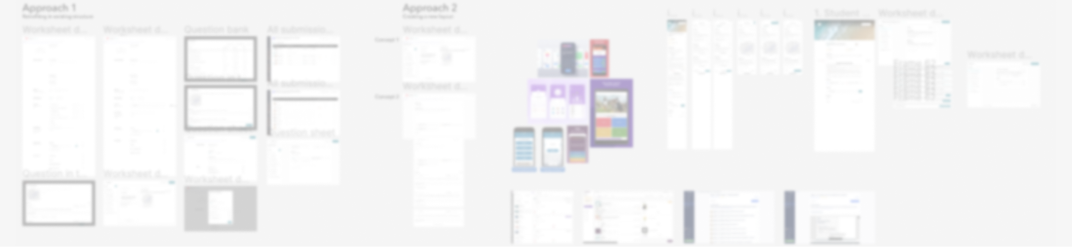
Low-fidelity concepts for initial user feedback and discussion
We approached delivery in two phases to meet immediate adoption needs without sacrificing long-term product quality.

To unblock critical school deals, we shipped a lightweight MVP within 2–3 weeks using a third-party question engine (H5P). This enabled:
The trade-off? Some performance and flexibility limitations - but acceptable for short-term use.
For the long game, we committed to rebuilding the feature using Toddle’s native design system—prioritizing:
This phased approach was a strategic call - ship what’s needed now to win business, and invest in what’s right for the long run.
Available when presenting online or offline
The final product was structured into four experience flows - each crafted through iterative design, user testing, and internal reviews:
These designs were validated through multiple peer reviews and live user walkthroughs, and snapshots are included in the Product Hightlights section.

Available when presenting online or offline
To ensure the worksheet module evolves meaningfully over time, we’ve identified several forward-looking opportunities. These features reflect Toddle’s commitment to turning worksheets from static tasks into dynamic, insight-driven learning loops:
Personalized insights to help teachers track student progress and learning gaps over time.

Auto-suggested content and follow-up activities based on student performance.

Intelligent, spaced learning sequences personalized to each student’s pace and needs.









AI first productivity tool - fast, focused
2025 · AI · Product Strategy ·  10 min read







Perks for MSME employees in UAE
2023 · Product Design · Mobile · 10 min read





For joyful creativity in the classroom
2023 · Product Design · Web & Mobile ·  Available soon
COPYRIGHT 2023
Last Updated: 26 Oct, 2023 · Designed and developed with ♥ by Abhishek Umrao
 Resume